- Amd Catalyst Control Center Download Windows 10
- How To Open Amd Catalyst Control Center
- Amd Catalyst 15.7.1 Win 10 64 Bit
AMD Catalyst Display Driver is licensed as freeware for PC or laptop with Windows 32 bit and 64 bit operating system without restrictions. It is in graphic card category and is available to all software users as a free download. This particular software suite updates the AMD Catalyst Display Driver and the AMD Catalyst Control Center / AMD Vision Engine Control Center. Windows 10 97,120 downloads 170 MB AMD Catalyst. If the new AMD Catalyst Control Center is able to open correctly and be started as usual, obviously, the Catalyst Control Center not working is caused by AMD Catalyst application on Windows 10. Open Control.
Amd Catalyst Control Center Download Windows 10
Release Highlights:
- Windows 10 Support
- Virtual Super Resolution (VSR)
- Frame Rate Target Control (FRTC)
- AMD FreeSync and AMD CrossFire Support
- Performance Optimizations
Windows 10 Support
This driver provides support for Windows 10 as well as full WDDM 2.0 and DirectX 12 support which is available on all AMD Graphics Core Next (GCN) products, - AMD Radeon HD 7000 and newer graphics products.
For more information on products supported please visit the Supported Products Tab and view the AMD Product Compatibility chart.
Virtual Super Resolution (VSR)
VSR provides image quality enhancements to games and Windows desktop users by rendering images at a higher resolution and then down-scaling the same. VSR support has now been extended to the following products:
Frame Rate Target Control (FRTC)
FRTC allows the user to set a maximum frame rate when playing an application in full screen exclusive mode. This feature provides the following benefits:
- Reduced GPU power consumption
- Reduced system heat
- Lower fan speeds and less noise
This feature is supported on applications using DirectX 10 or DirectX 11 and on the following AMD graphics products:
- AMD Radeon R9 Fury Series
- AMD Radeon R9 280 Series
- AMD Radeon R9 390 Series
- AMD Radeon R9 270 Series
- AMD Radeon R9 380 Series
- AMD Radeon R7 260 Series
- AMD Radeon R7 370 Series
- AMD Radeon HD 7900 Series
- AMD Radeon R7 360 Series
- AMD Radeon HD 7800 Series
- AMD Radeon R9 295X2
- AMD Radeon HD 7700 Series
- AMD Radeon R9 290 Series
AMD FreeSync and AMD CrossFire Support
AMD FreeSync and AMD CrossFire can now be used together in applications using DirectX 10 or DirectX 11. Please note, this feature is currently not supported on systems configured in AMD Dual Graphics mode.
Performance Optimizations
Counter-Strike: Global Offensive – Profile change to reduce Flip Queue Size – improves the latest positional information from keyboard and mouse.
Here's other similar drivers that are different versions or releases for different operating systems:- December 29, 2016
- Windows 7 / 8
- 148,348 downloads
- 6.6 MB
- November 17, 2015
- Windows 7/8/10
- 66,441 downloads
- 226 MB
- September 18, 2015
- Linux
- 12,506 downloads
- 173 MB
- August 28, 2015
- Windows 7/8/10
- 2,390 downloads
- 340 MB
- July 29, 2015
- Windows (all)
- 433,625 downloads
- 206 MB
- December 26, 2014
- Windows 7 / 8
- 7,573 downloads
- 322 MB
- December 9, 2014
- Windows 7 / 8
- 35,470 downloads
- 288 MB
- November 18, 2014
- Windows 7 / 8
- 39,530 downloads
- 215 MB
- September 4, 2014
- Windows (all)
- 2,990 downloads
- 209 MB
- August 18, 2014
- Windows 7 / 8
- 5,530 downloads
- 313 MB

Table Of Contents
- How To Install It
- Missing?
The AMD Catalyst Control Center is an element of the AMD Catalyst software engine.
This program supplies video personalization options to modify display settings, display profiles and overall video performance.
(We should note, that Windows users with AMD Radeon GPUs has ditched Catalyst in favor of an updated driver and video settings system that is called “Radeon Software“, according to Windows Central.)
But plenty of people still use the AMD Catalyst Control Center.
Below, we’ve outlined how to uninstall it, what to do if components are missing, what to do if it’s not opening, and some tips for gamers to use to enhance (or overclock) their computer’s graphics.
Where To Download It
Check out AMD’s AMD Catalyst Windows Driver page for up-to-date download options.
How To Configure The Best Gaming Settings
*Make sure you enable ‘Advanced View” within Preferences to get all the graphics settings.
History
Although the more everyday personal computer user will probably never find need to make use of this utility, it nevertheless performs an essential function for your video card- especially if you’re a gamer looking to tweak graphics settings.
ATI Technologies, a subsidiary of Advanced Micro Devices, most widely known for their personal computer processor chips, created the Catalyst Control Center (CCC) to enhance their product line of Radeon video cards. It first started to be offered as a device driver and utility software program in 2002 with the launch of the Radeon 8500.
The first software program incorporated extra utilities like Hydravision, a multimedia center; Remote Wonder along with other display components.
Of all these components, Catalyst Control Center became a pretty popular add-on and it is available these days for download included in the AMD Catalyst software bundle. Soon after Advanced Micro Devices (AMD) acquired ATI, the software became known as AMD Catalyst Control Center.
As the brand name suggests, the Catalyst Control Center serves as the main center for all options and functions pertaining to an AMD video card.
By releasing CCC, customers receive access to numerous features like digital control, display management, color adjustment 3D enabling, and overdriving.
- Display management enables computer users to handle several displays, screen resolutions and refresh rates.
- Digital control involves the adjustment of image scaling, permitting better display of resolutions that are smaller sized than the conventional display size.
- 3D enabling pertains to the graphics configurations for computer games, like adjusting anti-aliasing or anisotropic filtering.
- Color adjustment involves altering display elements like brightness, hue, and contrast.
- Overdriving is the display form of overclocking, enabling a greater frame refresh rate though giving up the brightness of individual pixels.
Even though the Windows operating system permits users to manage a few of these options, the AMD Catalyst Control Center provides access to increased amounts of personalization and display performance improvements.
Regardless of whether you make use of several monitors with varying resolution quality capabilities or multimedia software, CCC can manage just about all display functionality.
How To Install It
The following instructions from AMD Support provide instructions for installing AMD Catalyst on Windows 10 (they also provide installation instructions for other operating systems- Windows Vista, XP, 7 & 8:
How-To Install AMD Catalyst™ Drivers in a Windows 10 Based System
- Shut down all running applications such as any anti-virus software, firewall services, remote-access tools, or webcam programs prior to trying to set up the AMD Catalyst™ Driver.
- Once the downloadable installation file is run, a safety prompt will show up. Click on Run to begin the installing operation. It’s important to note: The Windows User Account Control (UAC) dialog box may show up inquiring, “Do you want to allow the following program to make changes to this computer?” Choose Yes to carry on with the installation.
- The AMD Catalyst™ Software: Installation Folder window will open up permitting the computer user to select the folder to which the installing files will be saved. Select Install. It’s important to note: AMD suggests employing the default location to prevent problems that may arise during installation from files that can’t be discovered or are absent.
- The AMD Catalyst™ Install Manager dialog window will open up permitting the computer user to choose the desired language. Select preferred language and click on Next.
- The AMD – Catalyst Install Manager will give you an option to finish an Express or Custom installation. Select Express, and then click Next. It’s important to note: AMD suggests an Express installation to make sure virtually all files necessary for the full performance of AMD Radeon graphics products are established.
- The End User License Agreement will show up. Examine the End User License Agreement and then click Accept if you accept the conditions and terms.
- The AMD Catalyst ™ Install Manager will evaluate the computer, and install the necessary data files. It’s important to note: The computer screen will flicker whilst the AMD Catalyst Driver is established. For those who have several monitor displays, a number of them will go black for a couple seconds then normal again.
- The AMD Catalyst™ Install Manager will verify once the set up is finished. Click on Finish.
- When prompted, click on Yes to reboot the computer and finish the installing process. It’s important to note: A computer reboot is needed to finish the installing process.
How To Uninstall It
Over at AMD support, they’ve outlined a process for doing a Windows uninstall- check it out below or refer to their site for the fix.
How To Open Amd Catalyst Control Center
Alternatively, you can follow the instructions in this video below to learn how to uninstall the AMD Graphics Driver:
How to Uninstall AMD Catalyst™ Drivers on Windows Vista, 7, 8.1 and Windows 10 Based Systems:
- Open your computer’s Control Panel
- Choose Programs and Features from the Control Panel
- Choose AMD Catalyst Install Manager.
- Click on Change
- The AMD Catalyst Install Manager – InstallShield Wizard should pop up- then click Next.
- Then after the prompt by the AMD Catalyst Install Manger – InstallShield Wizard, choose Express Uninstall ALL AMD Software.AMD cautions: The Windows User Account Control may possibly request, ‘Do you want to allow the following program from an unknown publisher to make changes to this computer?’In the event that it does: Click on, Yes to carry on with the removal operation.
- Click, “All Versions” to permit the AMD Catalyst Install Manager to get rid of ALL prior versions of the AMD display as well as audio drivers and AMD application elements set up by CIM. Clicking on “Current Version” will remove just the newest edition of drivers and components.
- The Uninstallation process should start.
- When asked to uninstall the AMD Catalyst Install Manager, click on Remove.
- Click on Finish.
- Click Yes when asked to reboot the computer and finish the removal process.
AMD advises that a Windows reboot is needed to finish the removal procedure.
To ensure that the AMD Catalyst Drivers and all associated software programs have been purged from your operating system, go back to the Program and Features list, and check out where any AMD entries can be found.
If you can find AMD specific records still listed, eliminate them employing the previously mentioned process.
Not Opening?
Amd Catalyst 15.7.1 Win 10 64 Bit
Over in the AMD Community, one user found a fix if you’re having trouble opening it:
- Open up your computer’s Task Manger
- Stop all tasks that are Catalyst related
- Then try re-opening AMD Catalyst Control Center- it should work.
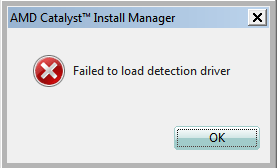
Other solutions from the AMD forums include:
Missing?
Some users complain that options are missing from their AMD control center. According to this thread, if you’re missing options, try looking within the Preference icon in the top right & select the Advanced View.
You can also follow this video guide if you’re missing settings within this video AMD utility:
We hope this page has helped resolve any problem or error you’re encountering with this AMD Graphic Card utility.